
Multimotor plenum fan

The Multimotor Plenum Fan

Multi motor fan

A SMARTER, SIMPLER WAY TO MOVE AIR.

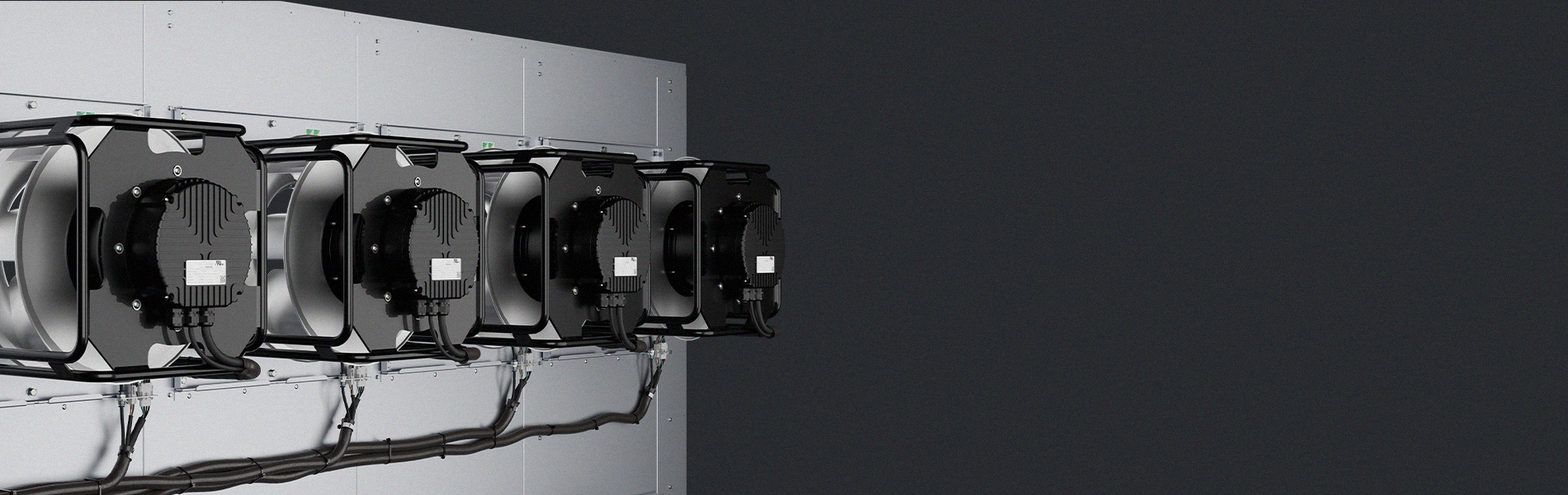
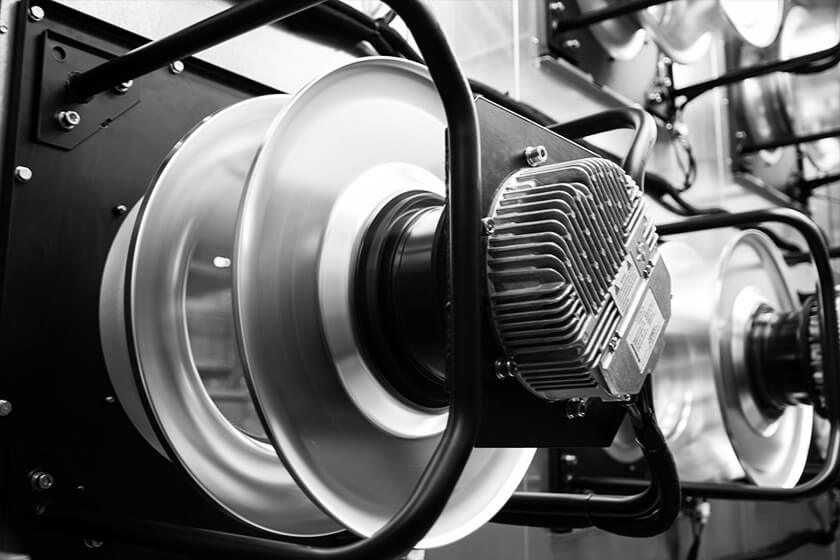
A multimotor plenum fan (MPF) is a new type of commercial HVAC fan that combines the simplicity of a traditional single-motor blower with the redundancy of a fan array. Instead of relying on one large motor or a set of field-built fan modules, an MPF uses multiple electronically commutated (EC) motors, all pre-routed to a single connection point for power and control. This design eliminates the need for external control panels, allowing direct pairing to the BMS or chosen control device. The MPF maintains resiliency through the multimotor design; when one motor fails, the fan speed can increase to maintain the system airflow. The advantage of the MPF is that it establishes a verified, tested performance curve to remove performance unknowns.

The Multimotor Plenum Fan (MPF)

Designed to simplify installation and streamline performance, this fan type delivers:

  • Mpf single device

    Single Device Functionality

    Single-motor fans have one big advantage: simplicity. One power run. One control point. One clean BMS connection. Fan arrays usually complicate that with an external panel just to make things talk. But a multimotor plenum fan builds that simplicity in. Its control architecture is internal—no need for a separate panel—so it connects straight to your BMS or controller with no extra boxes, no added guesswork.

  • Mpf unison operation

    Unison Operation

    With the MPF, you get unified control without the usual complexity. One signal in, coordinated response out. Each motor runs individually, but they all listen to the same command. Fan arrays can do the same, but only with an external control panel in the mix. The MPF builds that intelligence in from the start.

  • Mpf resiliency

    Resiliency

    The risk with single-motor fans is simple: one failure, and airflow stops. No backup, no buffer. That’s where fan arrays earn their keep, with built-in redundancy that keeps air moving even when a motor goes down. The MPF keeps that same advantage. Its multimotor design allows the system to absorb a failure, then ramp up remaining motors to hold airflow steady. That’s built-in resiliency: air keeps moving, even when something goes wrong.

  • What is an MPF?
    Mpf verified performance

    Verified Performance

    Single-motor systems have one thing going for them: proven performance. What you test is what you get. Fan arrays, on the other hand, often rely on theoretical projections, like scaling up a single fan’s curve and calling it good. But that approach rarely accounts for the system effect. Add a motor failure into the mix, and things get even less predictable. MPFs are built on verified performance, not projections. Their architecture is based on extensive testing, establishing performance curves that reflect real-world conditions, including system effect. So when you spec an MPF, you’re working with data you can trust, not estimates you have to adjust for later.

    What is an MPF?

Fan Comparisons

Single-Motor FanFan ArrayMPF
Single Device FunctionalityPower and control depend on a separately coordinated motor and VFD—not integrated, not turnkey. These units usually ship as one large, rigid assembly with no knockdown option, leading to heavier lifts, tighter clearances, and more installation headaches.Typically requires a proprietary external control panel to coordinate power and control. Each motor needs its own wiring, often demanding field assembly, custom fabrication, and added startup time.Simplified control, built-in. A single on-board device manages power and control, with all motors pre-wired for quick hookup. Ships as a complete assembly for fast, clean installs—no extra panels, no surprises.
Speed ModulationTypically uses an AC motor for higher horsepower, requiring a separate VFD to manage speed. More components, more coordination.Speed control depends on an external device—either a VFD for AC motors or a proprietary panel for EC motors. Control setups vary, adding complexity.Runs on EC motors for efficient, responsive performance across the full operating range. Accepts a direct control signal with no external speed device needed.
ResiliencyOne motor, one impeller, one point of failure. If it goes down, so does your airflow. The only workaround? Install a redundant fan and double your costs.Introduced the concept of load-sharing. By dividing airflow across multiple fans, the system can stay online even if one fan fails.Builds on the same principle of load-sharing. Its multimotor design distributes the load, so a single motor failure doesn’t stop the airflow or the system.
Repair and ReplacementOften seen as long-lasting, but that lifespan is usually propped up by constant maintenance and bandaid fixes. When failure hits, repairs demand skilled labor and custom work. Their size alone makes them a tough fit for tight, high-stakes spaces.Modular by nature and well-suited for replacements, especially in space-constrained settings. But replacing motors or impellers can require full disassembly and a fair amount of technical know-how.Engineered with motor replacement in mind. Repairs are straightforward and the modular design, available in knockdown assembly, makes it ideal for retrofit or replacement projects with minimal disruption.
Single Device Functionality
+ Single-Motor Fan

Power and control depend on a separately coordinated motor and VFD—not integrated, not turnkey. These units usually ship as one large, rigid assembly with no knockdown option, leading to heavier lifts, tighter clearances, and more installation headaches.

+ Fan Array

Typically requires a proprietary external control panel to coordinate power and control. Each motor needs its own wiring, often demanding field assembly, custom fabrication, and added startup time.

+ MPF

Simplified control, built-in. A single on-board device manages power and control, with all motors pre-wired for quick hookup. Ships as a complete assembly for fast, clean installs—no extra panels, no surprises.

Speed Modulation
+ Single-Motor Fan

Typically uses an AC motor for higher horsepower, requiring a separate VFD to manage speed. More components, more coordination.

+ Fan Array

Speed control depends on an external device—either a VFD for AC motors or a proprietary panel for EC motors. Control setups vary, adding complexity.

+ MPF

Runs on EC motors for efficient, responsive performance across the full operating range. Accepts a direct control signal with no external speed device needed.

Resiliency
+ Single-Motor Fan

One motor, one impeller, one point of failure. If it goes down, so does your airflow. The only workaround? Install a redundant fan and double your costs.

+ Fan Array

Introduced the concept of load-sharing. By dividing airflow across multiple fans, the system can stay online even if one fan fails.

+ MPF

Builds on the same principle of load-sharing. Its multimotor design distributes the load, so a single motor failure doesn’t stop the airflow or the system.

Repair and Replacement
+ Single-Motor Fan

Often seen as long-lasting, but that lifespan is usually propped up by constant maintenance and bandaid fixes. When failure hits, repairs demand skilled labor and custom work. Their size alone makes them a tough fit for tight, high-stakes spaces.

+ Fan Array

Modular by nature and well-suited for replacements, especially in space-constrained settings. But replacing motors or impellers can require full disassembly and a fair amount of technical know-how.

+ MPF

Engineered with motor replacement in mind. Repairs are straightforward and the modular design, available in knockdown assembly, makes it ideal for retrofit or replacement projects with minimal disruption.

Access Other Product Resources