The Air Handler Fan Is Critical to the Daily Operations of a Facility Teams
Air handlers play a critical role in most commercial buildings. They regulate airflow, support indoor air quality, and help maintain comfort across schools, offices, hospitals, and countless other facilities.
At the center of that system is the fan.
For most occupants, the building’s fans never cross their mind. For facility teams, the fan is critical and often a source of frustration. When a fan goes down, conditions can deteriorate quickly. Air quality drops, operations are disrupted, and worst of all, occupant comfort and trust plummet.
For the people responsible for the building, it immediately becomes the top priority.
At Q-PAC, we believe air handler fans should be designed to avoid those emergencies in the first place. More importantly, they should be designed around the people responsible for keeping buildings running every day.
Commercial HVAC Fans Should be Designed with the Operator in Mind
When facilities are designed or updated, decisions are often driven by cost, schedule, or legacy standards. Risk is typically addressed with conservative approaches such as oversizing equipment or adding redundancy.
Those choices can solve one problem but introduce another: complexity. And that complexity lands squarely on the facility teams responsible for keeping systems running. They are balancing preventive maintenance schedules, energy goals, occupant comfort, and aging infrastructure. Many teams are doing all of this while working within tight budgets and less staff. Keeping a building comfortable also involves more than simply moving air. Teams must manage vibration, noise, system stability, and the long-term reliability of equipment.
Preventive maintenance is planned and expected. Unexpected downtime is not. When a fan fails, it creates an emergency that disrupts everything on the team’s priority list. Projects get delayed. Temporary fixes become more common. And the cycle repeats.
At Q-PAC, we spend our time thinking about the fan so facility teams do not have to.
Current Fan Technology Misses the Mark
Q-PAC did not enter the industry as an outside disruptor. Our team has spent more than a decade designing and equipping custom air handlers and the systems that move air through them. Traditional blowers and single-motor fans have played an important role in commercial HVAC for decades. They are durable, mechanically straightforward, and generations of technicians understand how to maintain and repair them. Many facilities today are still running on systems built around those designs.
Our work at Q-PAC starts with that respect. The goal was never to dismiss what has worked for so long. It was to understand where those systems begin to create challenges for today’s facility teams, and to look for ways airflow systems could better support the people responsible for keeping buildings running.
The challenge today is that many of these systems are aging out. Replacement parts such as impellers, shafts, or housings can be difficult to source. Skilled machinists who can repair them are becoming harder to find. Even when a replacement fan is available, installation can be difficult. Large blowers often require cranes, structural modifications, or demolition work to get them into the building. For many facilities, that runs directly into budget limits and tight schedules.
But the deeper problem remains the same. When the fan fails, airflow stops.
Traditional fan systems rely on a single motor and a single fan. If that motor fails, the system stops moving air. Fan arrays were developed in the 2000s to solve that problem by spreading airflow across multiple smaller fans. If one fan fails, the others continue operating. In practice, that solution introduced new challenges. Fan arrays often require complex controls, custom wiring, and additional field work. Instead of replacing a fan, facility teams often find themselves installing and integrating an entire system.
That raises an important question. Can a fan provide redundancy without adding complexity?
The Multimotor Plenum Fan was Designed to Create a Simpler Option for Facility Teams
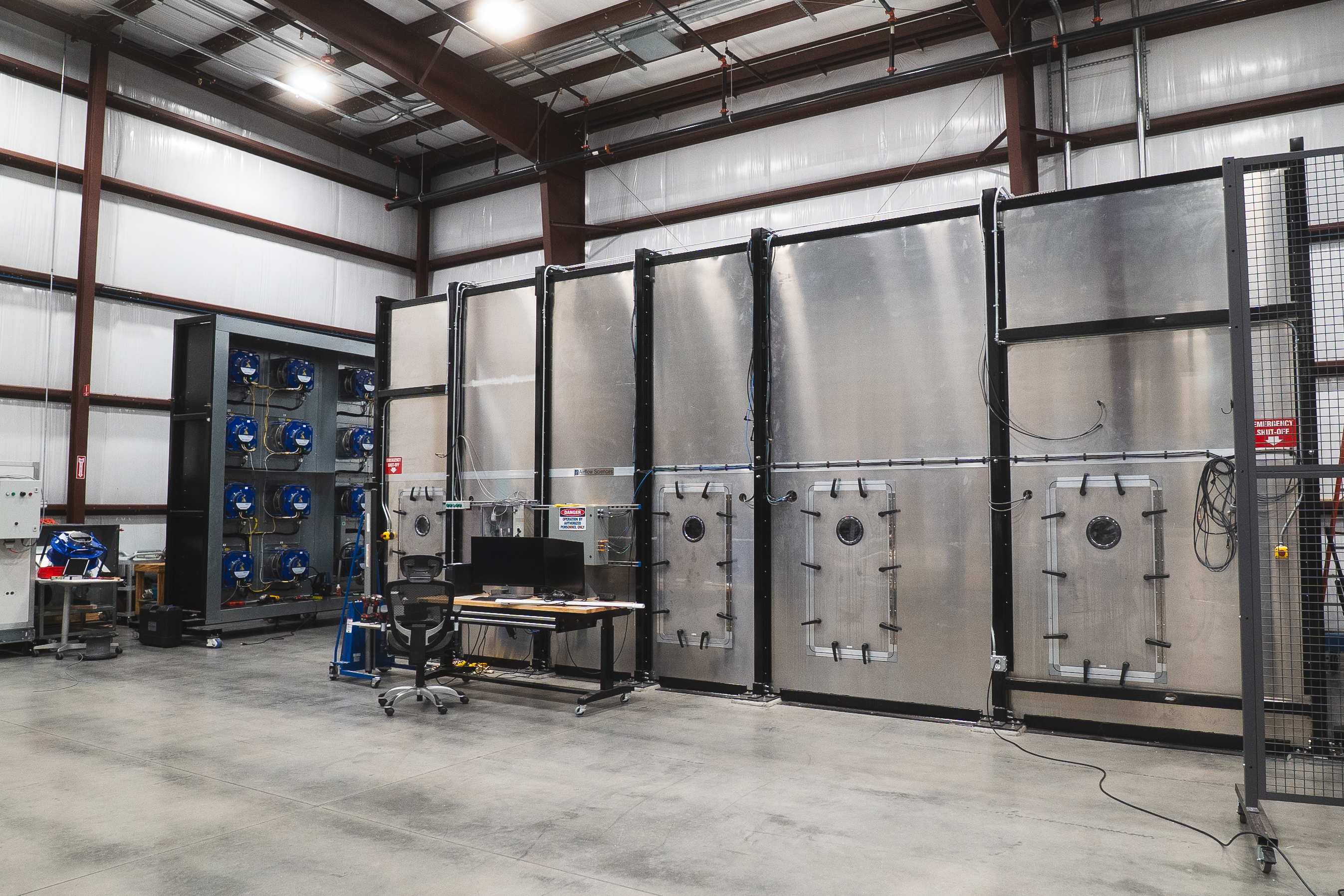
Q-PAC began by designing fan arrays for custom air handlers. Over time, our team focused on removing the obstacles that made those systems difficult to implement and maintain. We started by eliminating long design cycles. Instead of waiting hours or days for custom fan layouts, systems could be generated instantly based on airflow requirements and available dimensions.
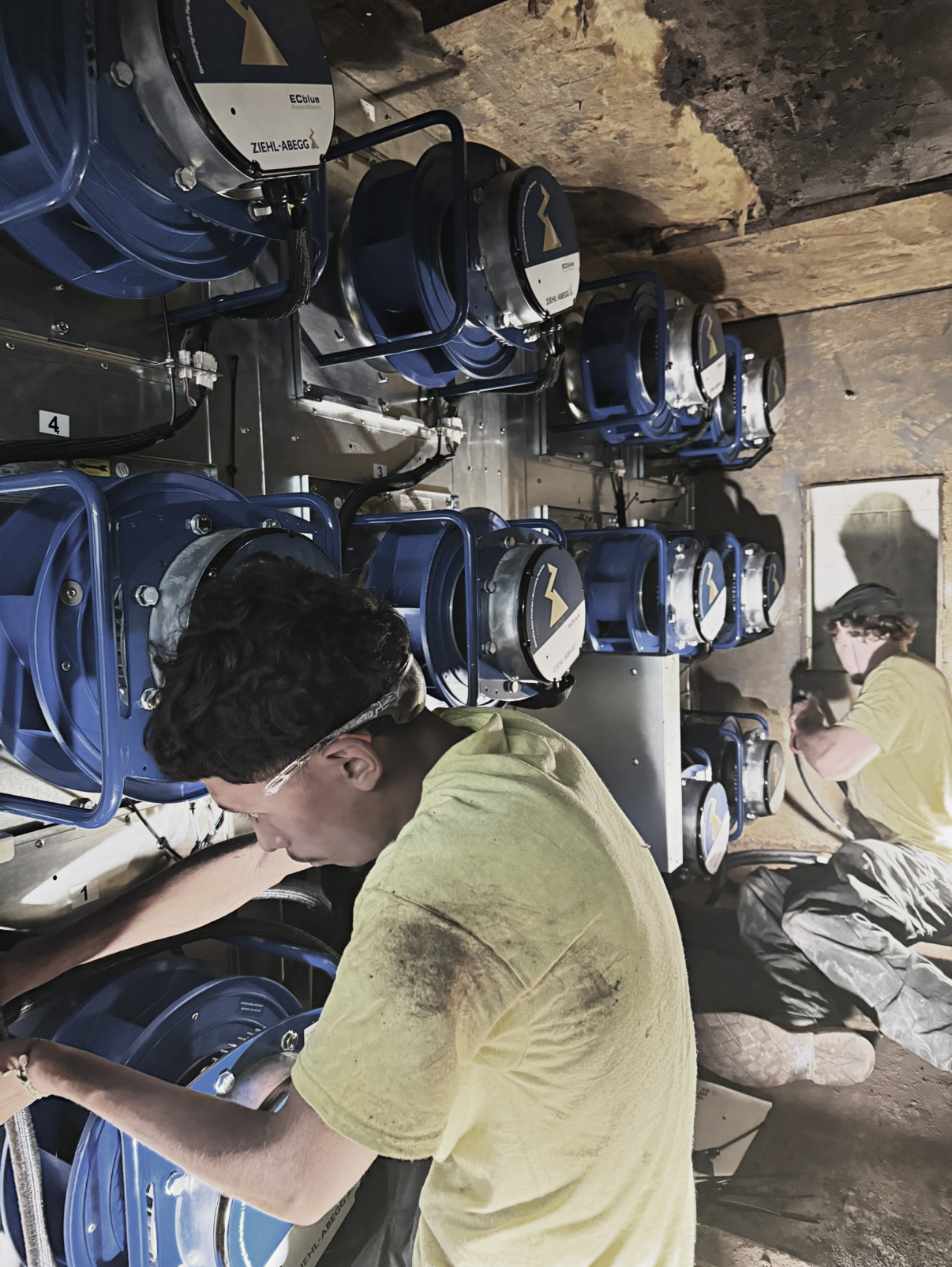
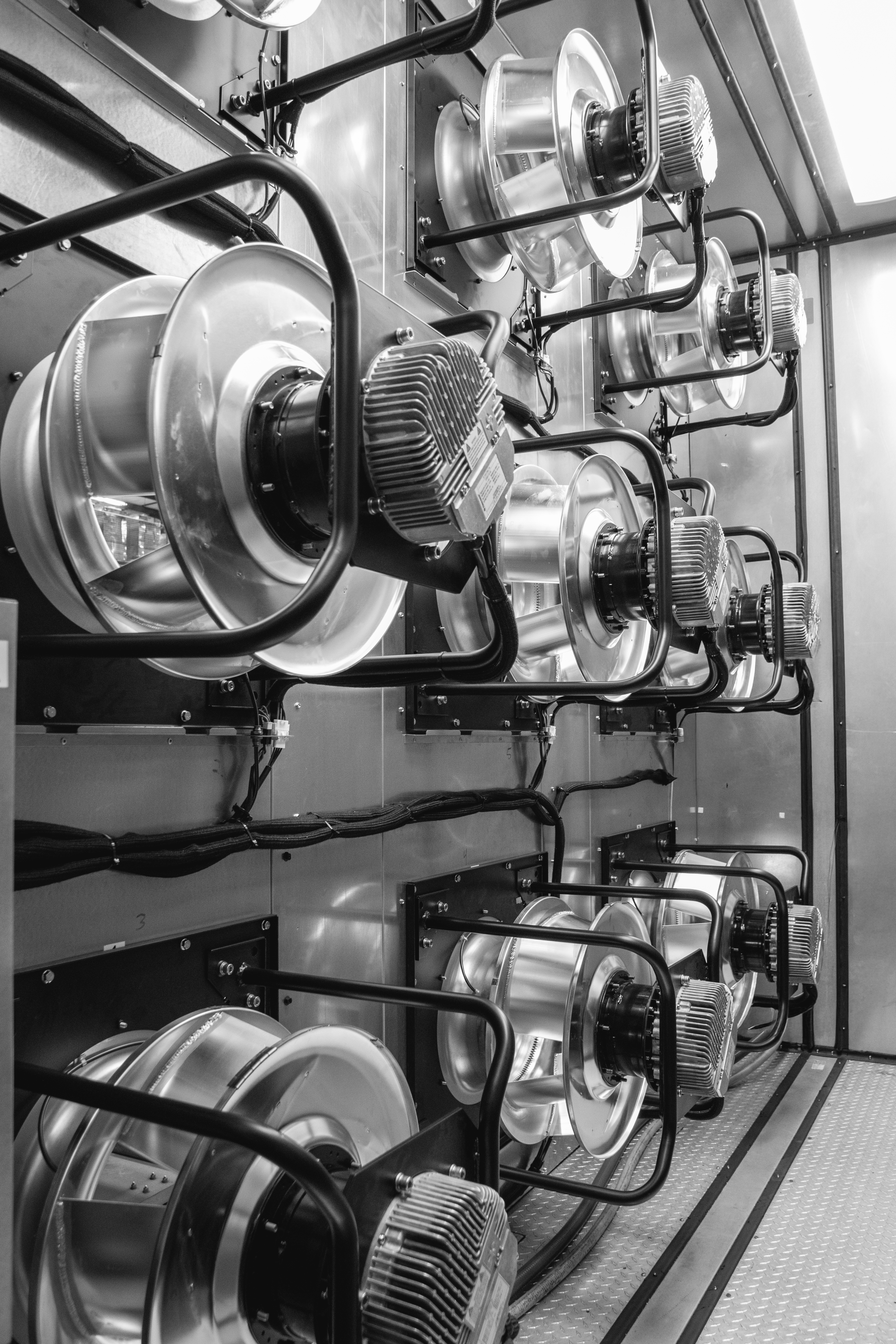
Next, we simplified installation. Motors are pre-wired and connect through a simple plug system to a central hub. That hub becomes the single point of connection for power and controls. More recently, we removed the need for a proprietary control panel. The hub, now known as the Fan Controller, allows the system to interface with a wide range of control environments. At that point something became clear. We were no longer building complex fan arrays. We had built a single device. A fan designed around multiple motors.
A multimotor plenum fan.
The goal was never to dismiss traditional fans. It was to remove unnecessary mechanical and operational layers so facility teams have a system that is easier to integrate, manage, and support. Because the motors share the workload, the fan continues operating even if one motor stops. Airflow is maintained while the facility team schedules a convenient time to replace the motor and restore full capacity.
No emergency shutdown. No scramble. Just time to address the issue on the team’s schedule.
Ultimately, the goal is simple. A fan that facility teams rarely have to think about. They have far more important responsibilities competing for their attention.
The Q-PAC Vision is Driven by a Commit toward Airflow Simplicity
Q-PAC did not begin with a marketing strategy or a plan to build a fan. The company started by noticing a gap. As CEO Matt Kent explains, there was “a disconnect between how air handler fans were moving air and what facility teams actually needed.”
The opportunity became clear:
• Reimagine the air handler fan around simplicity.
• Align commercial HVAC fans with modern energy and reliability goals.
• Reduce friction for the people responsible for operating buildings.
For the Q-PAC team, this is not just an engineering problem. It is a commitment to the people responsible for keeping buildings running.
Because moving air may seem simple. But in commercial facilities, airflow supports everything that happens inside the building. Comfort, productivity, indoor air quality, and operational continuity all depend on it. And the people accountable for those outcomes deserve systems designed with their daily work in mind.
Contact us to learn more about whether the Q-PAC Fan is the right fit for your facility and your team.