5 Hidden Inefficiencies of Traditional Fan Systems and How the MPF Solves Them
Many of today’s commercial HVAC fan systems still operate on design assumptions that haven’t changed in decades. Over time, engineers and facility teams have developed workarounds to address persistent limitations in performance, control, and maintenance. These compromises may be familiar, but they often create long-term inefficiencies that increase costs and restrict operational flexibility.
This article explores five of those persistent pain points found in traditional HVAC fan systems, whether single fans with variable frequency drives (VFDs) or multi-fan arrays, and shows how the multimotor plenum fan (MPF) delivers a more unified, intelligent solution. The MPF retains the resilience of a fan array but is engineered to operate as a single fan with multiple motors, not multiple standalone units. The result is a streamlined system that simplifies control, reduces risk, and adapts to the real-world challenges technicians and engineers face every day.
1. Single Point of Failure
What’s the inefficiency?
Conventional fans typically rely on one large motor. If that motor or its paired VFD fails, airflow is lost entirely, and the system goes down until repairs can be made.
Why is it inefficient?
This creates a critical vulnerability that leads to unplanned downtime, emergency service calls, and potentially uncomfortable or unsafe building conditions.
How does the MPF solve it?
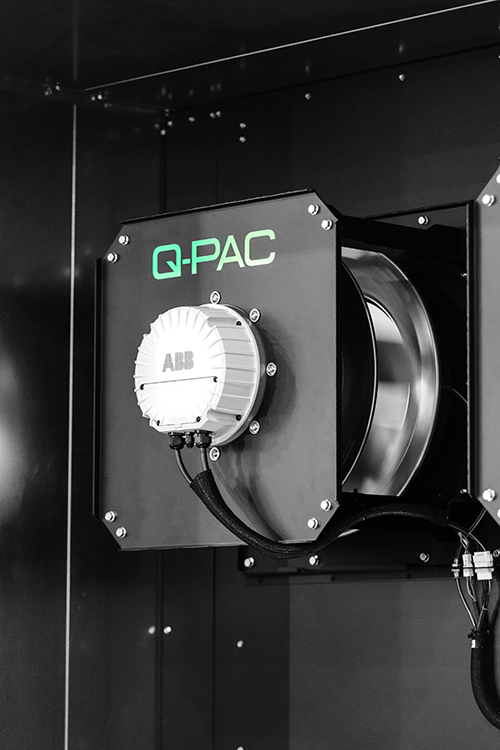
The MPF uses multiple motors that operate together as a single fan. If one motor fails, the others keep the system running without interruption, maintaining airflow until service can be scheduled.
Everyday benefit:
Improved uptime and more control over maintenance windows. Facilities teams avoid immediate disruptions, and the system keeps delivering air even when a component fails.
2. Complex Startup and Control Coordination
What’s the inefficiency?
Traditional fan systems, whether single fans with VFDs or multi-fan arrays, often require time-consuming setup and control tuning. VFDs must be programmed. Arrays demand individual fan configuration and coordination across trades — electrical, controls, and mechanical — to function properly within a building automation system (BAS).
Why is it inefficient?
Commissioning becomes slow and error-prone. Each fan or drive introduces a new layer of complexity, increasing reliance on controls contractors and extending startup timelines. With arrays, ensuring consistent behavior across multiple fans can require custom programming or ongoing BAS oversight.
How does the MPF solve it?
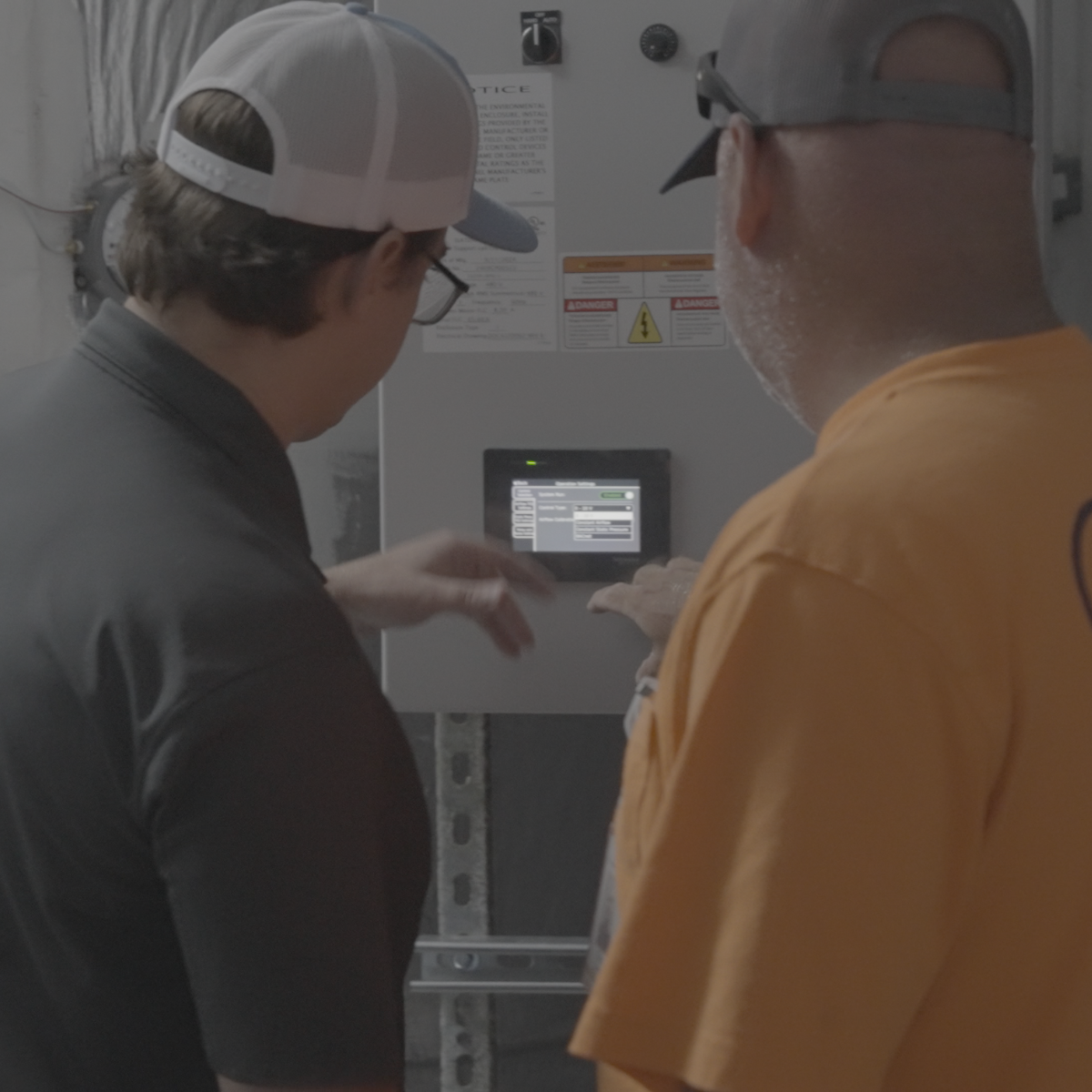
The multimotor plenum fan is designed to operate as a single, unified fan, even though it uses multiple motors. It comes with integrated controls that are pre-configured for coordinated performance, eliminating the need for external VFDs, individual fan tuning, or fragmented logic.
Everyday benefit:
Faster startup, cleaner handoff, and a system that works “right out of the box.” Engineers, contractors, and technicians spend less time troubleshooting and more time restoring system operation.
3. Maintenance Complexity and Cost
What’s the inefficiency?
Single-motor fans often require belts, grease, and routine preventative maintenance. Fan arrays, on the other hand, introduce complexity by relying on multiple independent fan units that each require their own wiring, controls, and service approach.
Why is it inefficient?
These tasks are not necessarily difficult, but they demand time and attention and must compete with other critical responsibilities in a facility’s maintenance schedule. Service becomes inconsistent and labor-intensive. Large fans often require custom repair work, and fan arrays mean multiple points of service, each with its own wiring, controls, and failure modes. Over time, facilities may find themselves locked into maintaining one-of-a-kind, site-built systems that require custom parts and deep tribal knowledge to support.
How does the MPF solve it?
As a single device, an MPF eliminates maintenance. All components — from motors to mounting structures — are pre-engineered to work together. Replacement parts are standardized and typically available off the shelf using defined part numbers. Compared to arrays, there is one fan system to inspect, power, and control—not several. MPFs eliminate nearly all traditional preventative maintenance tasks. There are no belts to tension or replace, no shaft bearings to grease, and no pulley alignments to perform. Electrical checks are simplified with standardized components, and integrated controls eliminate the need for VFD programming. These design choices reduce service labor, minimize downtime, and ensure consistency across systems and sites.
Everyday benefit:
Faster, more predictable service, no maintenance variables, and easier parts sourcing. Some manufacturers go further by designing MPFs around a run-to-failure model, enabling technicians to replace motors using quick mechanical and electrical connections — no rewiring, reprogramming, or scheduled lubrication required.
4. Installation and Retrofit Barriers
What’s the inefficiency?
In many older buildings, traditional fans were installed before the building was fully enclosed. Replacing them today may require cutting holes in walls, renting cranes, or dismantling equipment in the field. Even in newer spaces, access can be extremely limited.
Why is it inefficient?
These constraints drive up cost and project duration. Fan arrays, while composed of smaller units, typically arrive as individual cube fans. They require on-site assembly, structural framing, individual motor wiring, and custom control programming that usually involves coordination across several trades.
How does the MPF solve it?
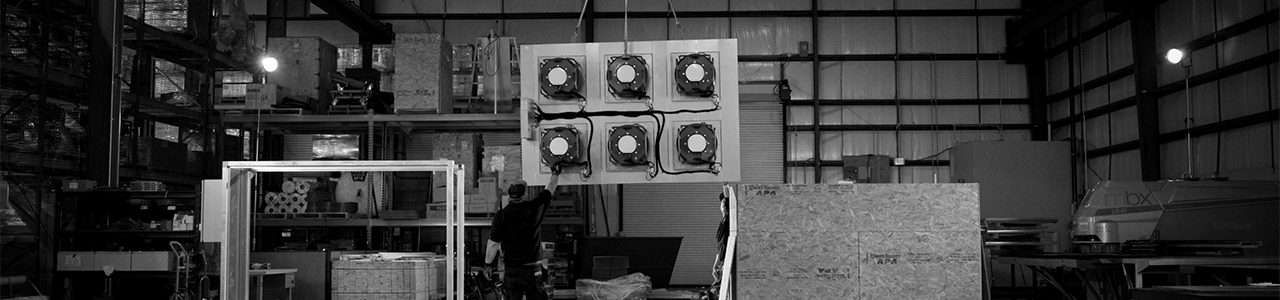
MPFs are designed with smaller, modular components that improve access to tight mechanical spaces. They are typically shipped in a knockdown configuration, allowing them to be hand carried into position and assembled at the final install location. Despite being assembled on site, an MPF functions as a single device with a shared mounting structure, integrated controls, and a single power and control connection.
Everyday benefit:
Simpler logistics, faster installs, and fewer coordination points. MPFs help eliminate many of the challenges associated with getting airflow equipment into hard-to-reach mechanical rooms.
5. Built-In Resiliency Without Added System Complexity
What’s the inefficiency?
Traditional fan systems often require added layers of safety or redundancy to ensure uptime. This might include oversizing, installing backup fans, or specifying large VFDs with wide safety margins. These solutions add cost and complexity, and they often exist to compensate for the limitations of a single point of failure or fixed-speed control.
Why is it inefficient?
While these choices are made for good reason, they can inflate project budgets, increase equipment footprint, and introduce more components to manage and maintain — especially when system flexibility or resiliency must be designed in manually.
How does the MPF solve it?
With multiple motors working together in a unified system, MPFs offer inherent resiliency. If one motor fails, others continue running. In fully resilient designs, they can ramp up to meet airflow targets without requiring added equipment or engineered workarounds.
Everyday benefit:
Engineers can design with confidence knowing the fan is built for resiliency, not redundancy. With failure-tolerant architecture and the ability to maintain performance even if a motor goes offline, MPFs reduce the need for backup equipment or overbuilt systems. This leads to cleaner designs, easier installs, and more reliable long-term operation.
Final Thoughts
The multimotor plenum fan bridges the gap between traditional single-motor fans and fan arrays. It offers resiliency without added complexity and integrated intelligence without extra control layers. By addressing five common inefficiencies found in legacy fan designs, MPFs set a new standard for what commercial HVAC systems can be: practical, resilient, and easier to manage.
They also offer operational transparency. Integrated controls in many MPFs provide diagnostic and monitoring capabilities that make it easier to track performance, catch issues early, and prevent downtime.
They also help future-proof facilities. With fully specified components, simplified maintenance, and consistent controls, MPFs reduce the risk of getting locked into complicated, site-specific installations that are hard to support over time.
Want to see how this architecture could fit your application?