Breaking the Misconception: Understanding True Fan Efficiency
Efficiency is a key metric in the commercial HVAC and air movement industry, but how it's defined and measured can vary significantly. Relying solely on motor efficiency to establish performance benchmarks is a common line of thinking, when considering performance for the entire system (the motor, and all components downstream) presents a more comprehensive view of expected performance.
This narrow view can cause misleading comparisons, especially when evaluating products from different manufacturers and their potential applications in commercial settings. In this blog, we’ll break down the distinctions between motor efficiency, fan static efficiency, and wire-to-air efficiency, explore why system-level metrics are the most relevant, and offer guidance to help buyers make informed, energy-conscious decisions.
The Common Misconception: Motor Efficiency vs. System Efficiency
In discussions with consulting engineers, mechanical contractors, and equipment specifiers, a common pattern has emerged: some perceive a fan efficiency rating of 65% as low, particularly when competitors promote motors with efficiencies of 95% or more. The issue? These are not equivalent measures.
Motor efficiency refers strictly to how well a motor converts electrical power into mechanical shaft power. It’s an important number - but it represents just one component in a much larger system.
Fan (System-Level) efficiency is a broader concept that accounts for all the energy losses from motor to airflow delivery: belts, bearings, impellers, drive systems, and the aerodynamic resistance imposed by the ductwork and installed accessories. In other words, it captures the real cost of moving air.
Evaluating a fan system based solely on motor efficiency is like judging a vehicle’s fuel economy based only on the engine, without accounting for tire drag, transmission losses, or terrain.
Consider this scenario: A design engineer is comparing two plenum fans - one with a 95% motor efficiency and one with an overall wire-to-air efficiency of 52%. On paper, the motor looks superior. But if the fan it’s driving operates at 65% static efficiency and the system includes filters, dampers, and restrictive ducting, the actual performance may fall well short of expectations. Without accounting for the full system, decisions based on motor efficiency alone can lead to underperforming designs and higher energy costs.
Fan Static Efficiency: A More Practical Benchmark
Fan Static efficiency measures how effectively a fan converts mechanical energy into airflow against static pressure. It’s a more realistic indicator of fan performance under typical operating conditions. This efficiency is primarily driven by the impeller design, including blade geometry and airfoil shape, which directly influence how efficiently air is moved through the system.
In some cases, manufacturers promote motor efficiency as if it equals total system efficiency, implying that a 95% motor guarantees a highly efficient fan system. This is a misleading simplification.
Consider this example: A 95% motor efficiency multiplied by a 65% fan static efficiency and an 80% control efficiency results in,
System Efficiency = 0.95 x 0.65 x 0.85 = 52.5%
However, this still doesn’t account for control losses or real-world pressure drops introduced by accessories like filters, backdraft dampers, or poorly optimized duct layouts. While static efficiency gives a more realistic picture than motor efficiency alone - because it considers aerodynamic performance - it still doesn’t capture total energy use across the entire system. For that, wire-to-air efficiency remains the most complete and meaningful benchmark.
Wire-to-Air Efficiency: The True System Performance Metric
What truly matters is wire-to-air efficiency - a metric that reflects the percentage of electrical energy input that is converted into useful airflow output. It includes:
Motor performance
Belt and drive losses
VFD (Variable Frequency Drive) inefficiencies
Aerodynamic drag and pressure loss in real-world applications
Wire-to-air efficiency tells the complete story: from power drawn at the electrical outlet (the "wire") to the volume of air moved by the fan. This is the metric that best represents actual energy usage and system performance.
A fan system with slightly lower static efficiency but optimized for real-world conditions - like reduced inlet and outlet losses, minimal filter resistance, and smart control logic - can often outperform a system with higher rated efficiency that's hampered by poorly configured ductwork, restrictive accessories, or constant-speed operation.
For instance, a fan with 60% static efficiency operating in a clean, low-resistance system with VFD control may consume less energy overall than a 65% efficient fan installed in a high-resistance layout with fixed-speed control. A fan with lower static efficiency but sized to operate near its peak performance at the system's required flow and pressure can use less energy than a "high-efficiency" fan that’s oversized and spends most of its time running off its peak efficiency curve.
Fan Efficiency in the Multimotor Plenum Fan Architecture
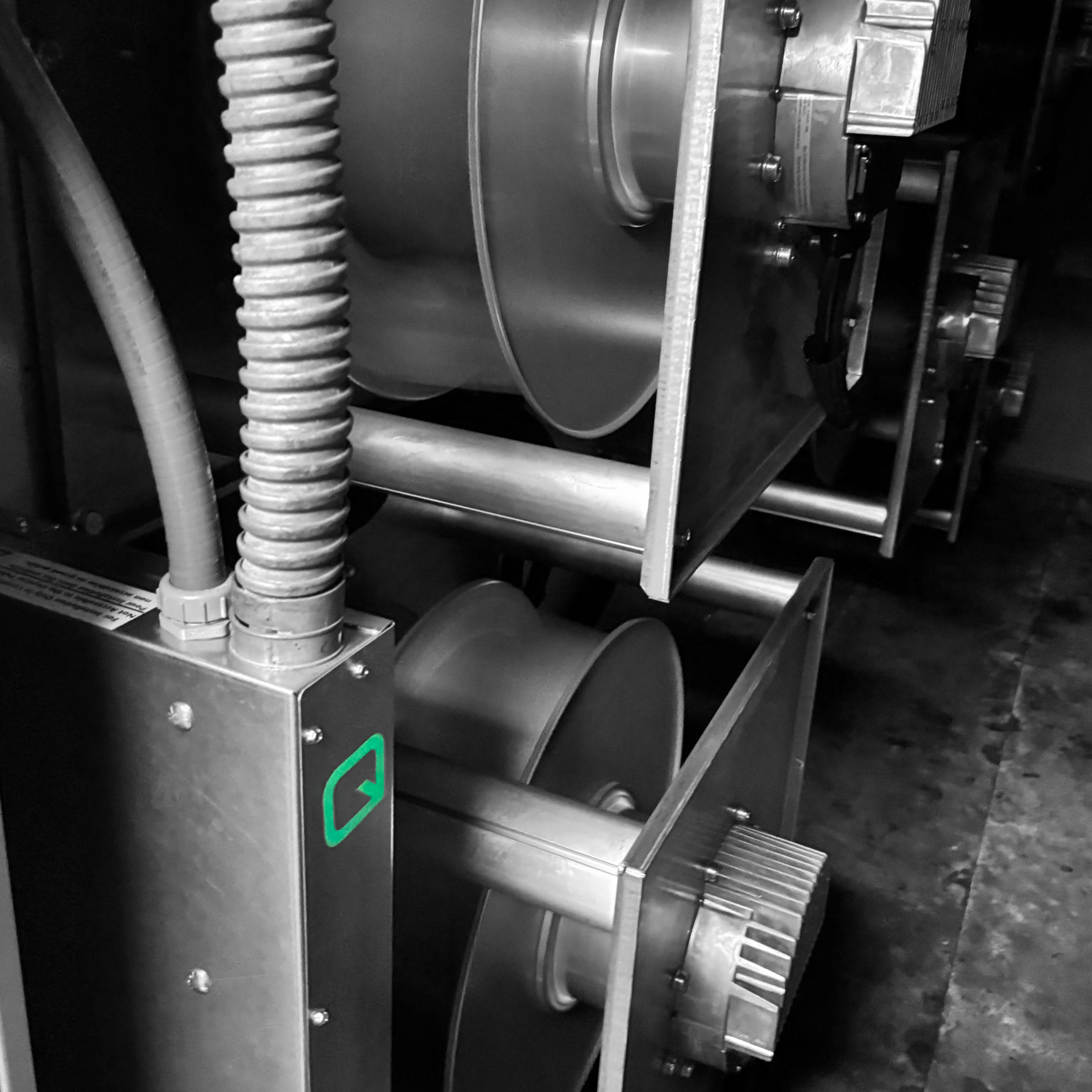
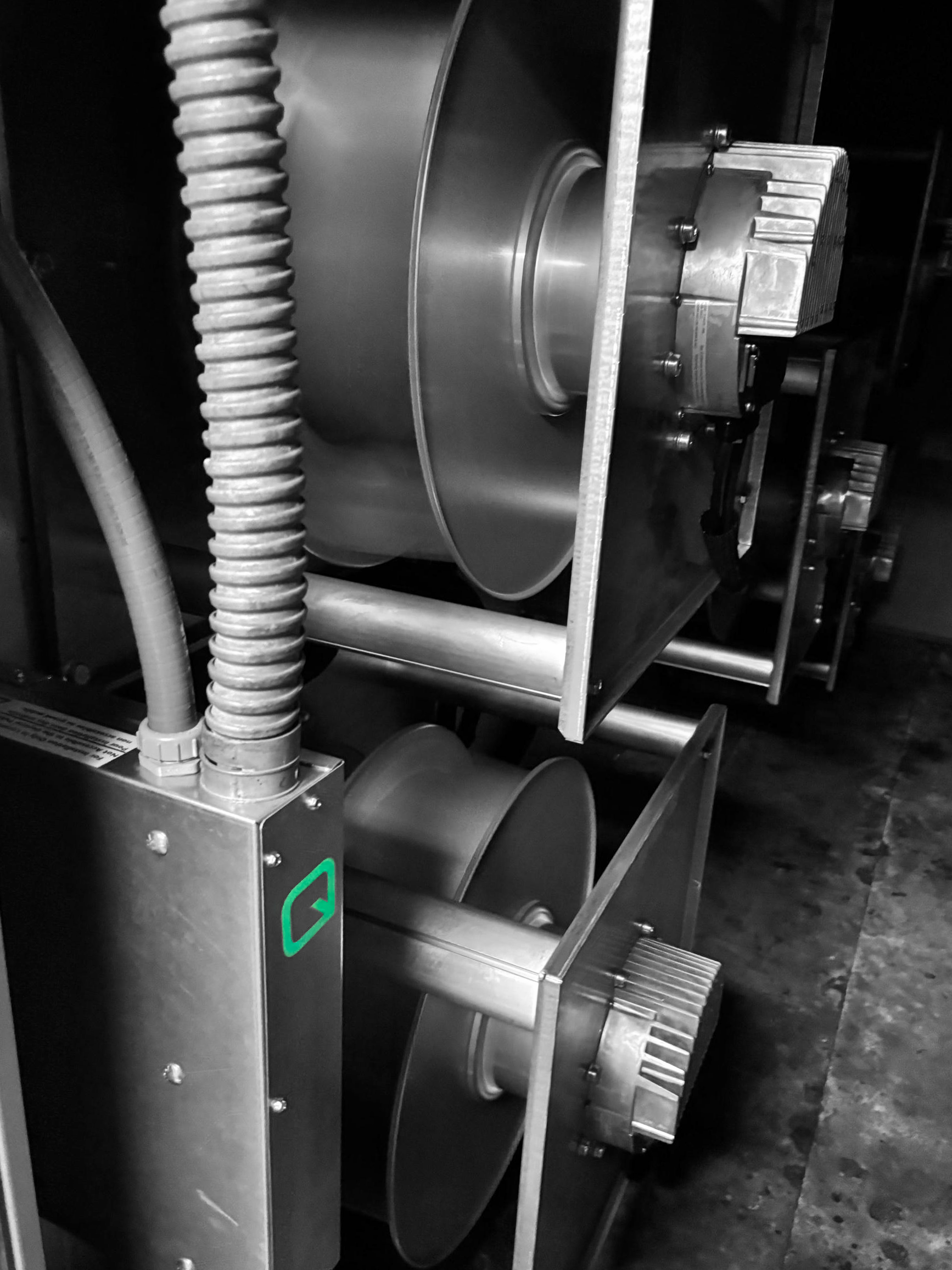
Multimotor plenum fans (MPFs) have emerged as a compelling alternative to traditional single-blower systems - and for good reason. By combining multiple compact fans and motors into a unified array, MPFs offer clear advantages in redundancy, scalability, and control. They provide system designers with greater flexibility, improved part-load efficiency, and easier serviceability compared to traditional single-blower systems.
One of the key strengths of MPFs is that manufacturers typically test and rate the system as a complete device. This means engineers and specifiers are working with integrated performance data that reflects real, measurable output - not just theoretical component efficiencies.
That said, maximizing the efficiency of an MPF system still depends on smart application and thoughtful system design. Even with tested performance data in hand, real-world factors can influence how well the system performs once installed.
What to Keep in Mind:
Drive and control losses: While motor efficiency is generally high, factors such as harmonic distortion, and uneven fan loading - especially at part-load - can impact overall system performance.
Airflow balance across the system: MPF systems assume relatively even airflow distribution across fans. Achieving this in practice requires a well-designed plenum and control logic that ensures fans are sequenced and modulated correctly.
Downstream system effects: Filters, backdraft dampers, ductwork layout, and static regain sections all contribute to pressure loss. These elements must be considered when evaluating total wire-to-air efficiency.
Ultimately, MPFs provide a highly efficient and adaptable solution when applied thoughtfully. Their benefits are best realized when system-level factors - such as duct design, airflow uniformity, and control strategy - are optimized alongside equipment selection.
At Q-PAC, we see MPFs not just as a technology shift - but as a chance to rethink how fan systems are specified, measured, and optimized for modern building needs.
The Problem with Traditional Efficiency Claims
Efficiency ratings are misleading when removed from real-world context. Many blower-based systems or legacy commercial fans report fan efficiency under idealized lab conditions - such as uniform airflow, minimal static pressure, and no downstream accessories. These controlled setups rarely reflect the complexity of actual building systems, where duct restrictions, filters, turns, and control strategies all affect performance.
Furthermore, motor efficiency values are often quoted as standalone specs, without any integration into the airflow system - leading to the misconception that a high-efficiency motor is synonymous with a high-efficiency fan solution. In reality, a system’s true efficiency must include how well it converts electrical power into useful airflow - wire-to-air efficiency - under the conditions it will actually face.
These disconnects in efficiency reporting don’t just affect engineers - they have real consequences for end-users, facility operators, and building occupants. Poor system-level efficiency can lead to higher energy bills, increased wear on equipment, and inconsistent airflow or comfort issues within occupied spaces. When decisions are based on idealized or partial metrics, the result is often an underperforming system that falls short of both operational and occupant expectations.
This challenge of inconsistent efficiency comparisons is exactly what led to the development of a standardized performance metric: the Fan Energy Index (FEI).
The Role of FEI in Standardizing Efficiency Comparisons
The need for a standardized, application-relevant efficiency metric led to the development of the Fan Energy Index (FEI), introduced by AMCA and adopted into energy codes such as ASHRAE 90.1 and California Title 24. FEI was designed specifically to address the challenges outlined in this article - namely, the difficulty in comparing fan systems based on disparate or incomplete efficiency data (e.g., motor-only or static efficiency values).
FEI is a dimensionless performance metric that compares the electrical input power of a given fan configuration (including motor and drive losses) to a baseline fan system delivering the same airflow and pressure. An FEI of 1.00 indicates performance equal to the baseline; values above 1.00 signify superior energy performance, while values below 1.00 fall short of the efficiency target.
Unlike Fan Efficiency Grade (FEG), which is a design-only metric based on peak aerodynamic efficiency of the fan impeller, FEI incorporates actual operating points, including motor and drive effects. FEG does not account for motor size, part-load performance, control strategy, or system effects, which makes it an incomplete basis for energy efficiency evaluation in real-world HVAC applications.
By incorporating wire-to-air efficiency at a specified duty point, FEI enables true apples-to-apples comparisons across fan systems, regardless of fan type, drive method, or manufacturer. It also supports part-load evaluation and encourages optimization not only of the fan selection, but also of the control scheme and overall system design.
At Q-PAC, while our QUIPS tool reports wire-to-air efficiency directly for clarity and transparency, we also recognize the value of FEI as a unifying benchmark. We support its use as a standardized metric to drive better engineering decisions, meet code compliance, and ensure more accurate representations of system-level energy performance.
How We Approach Efficiency Reporting
At Q-PAC, we recognize the limitations of traditional efficiency claims and the gap they leave in evaluating real-world performance.
Our fan selection tool, QUIPS, reports wire-to-air efficiency, which factors in motor, control, and fan performance. While this still doesn’t capture every variable found in the field—like filter loading, ductwork losses, or varying environmental conditions - it offers a much more holistic view than quoting motor efficiency alone.
We don’t claim to eliminate all uncertainty, but we aim to reduce it. By giving engineers a realistic baseline and clearly reporting assumptions, we help support more informed comparisons across technologies and vendors. Our goal isn’t just to show a high number - it’s to provide a number that means something in practice.
That’s why we encourage consulting engineers, mechanical contractors, equipment specifiers and system designers, to look beyond the headline numbers and ask the right questions when evaluating fan systems.
How to Evaluate Fan System Efficiency: Key Questions to Ask
Evaluating fan system efficiency goes beyond scanning a spec sheet. To get a true picture of performance - especially when comparing systems - engineers should ask themselves critical questions that cut through marketing claims and reveal how a system performs under real-world conditions:
What efficiency metric is being reported? Is the value motor efficiency, fan static efficiency, or wire-to-air efficiency? Each tells a different part of the story, and only wire-to-air efficiency captures the full system picture.
What losses are included? Are belt losses, drive inefficiencies, mechanical losses, and thermal derating accounted for? For systems using Variable Frequency Drives (VFDs), it's important to note that VFDs typically introduce 2–5% energy loss through power conversion - primarily from switching losses and heat generation. Additionally, VFDs can negatively impact motor efficiency due to harmonic distortion and increased motor heating, particularly at low speeds or during part-load operation.
Does the efficiency apply across real operating conditions? Many systems spend most of their time at part-load. How does the system perform during those periods? Are there losses due to uneven fan loading, inefficient turndown strategies, or poor plenum airflow?
Are comparisons apples-to-apples? Is one vendor quoting just motor efficiency, while another provides full wire-to-air performance? Make sure the metrics are consistent to ensure a fair evaluation.
Is detailed performance data available? Look for full fan curves, efficiency maps, and clear specs that cover both peak and part-load conditions. Transparency in documentation is a sign of robust engineering - and makes accurate comparisons possible.
Asking these questions helps uncover the true energy performance of a fan system, guiding decisions that go beyond nameplate ratings to deliver lasting value in the field.
As the HVAC industry continues to prioritize energy efficiency, we must collectively move beyond simple component ratings. Motor efficiency is just one part of the equation. The true measure of a system’s value lies in wire-to-air efficiency, which reflects real-world energy performance.
For system designers, engineers, and facility managers, the payoff for adopting this system-level mindset is significant: lower energy costs, better code compliance, more predictable performance, and fewer post-installation surprises. On the flip side, clinging to outdated efficiency comparisons can result in oversized equipment, poor part-load behavior, increased operational costs, and reduced occupant comfort. In a landscape where performance and accountability matter more than ever, the risk of relying on incomplete metrics isn't just technical - it's financial and operational. By focusing on system-level metrics, demanding transparency, and asking the right questions, buyers can make smarter, more sustainable choices.
Don’t be misled by isolated numbers. Dig deeper. Expect clarity. Choose systems that deliver. Engineered efficiency starts with engineered understanding.
Have questions about fan efficiency, multimotor plenum fans or how to optimize your system? Contact us today to learn more about how we ensure real performance for real applications.