PA Liquor Control Board Partners with Q-PAC on Commercial HVAC Fan Test
When the Right Opportunity Finds You
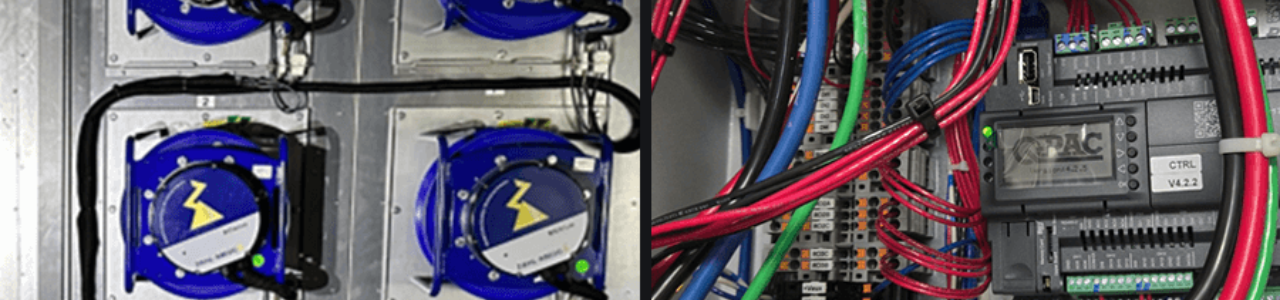
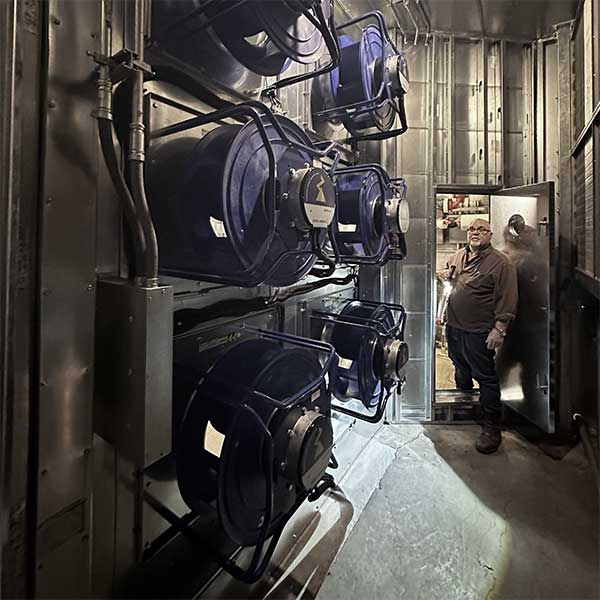
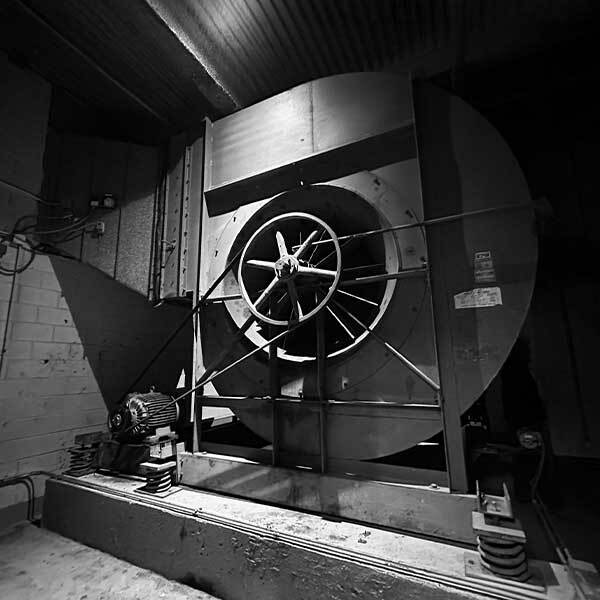
When a legacy fan failed at the Pennsylvania Liquor Control Board (PLCB) building in Harrisburg, it created a unique moment: the chance to directly compare a Q-PAC Multimotor Plenum Fan (MPF) with the same model of belt-driven blower running right beside it. No theoretical assumptions. Just two fans side by side, moving the same air, in the same system. Under real load. Here are our findings.
Side-by-Side, Same Job, Totally Different Results
The Q-PAC Fan used 43% less power than the old fan
Calculated savings of $8,100/year in electricity
And that’s just one fan
While this test only involved one supply fan, the building contains another of the same model and two return fans. If all three were upgraded to Q-PAC Fans, the total estimated energy savings could reach $20K+ a year — a significant impact with minimal infrastructure change.
Why It Mattered for the Team on the Ground
No Maintenance. No Failures. No Worries. The Q-PAC Fan didn’t just use less energy — it was easier to install, easier to manage, and way more resilient when tasked with daily operation. If you've ever had to drop everything because of a fan failure — or explain rising utility and service bills — this story probably feels familiar.
This wasn’t a best-case scenario in a lab. This was real equipment in a real building, running 18 hours a day.
What's the Takeaway?
You don’t need a full system replacement to make a serious dent in your energy bill and service hours. Just replacing a failed fan with a Q-PAC Fan can cut power use by almost half.
Still Interested? Here’s a deeper look at the methodology:
Test Conditions: A One-To-One Live Comparison
The two supply fans– AC-1 (legacy) and AC-2 (Q-PAC Fan)– each served just above 20,000 CFM. Calibrated energy loggers recorded power usage over normal operation cycles, offering clean, one-to-one comparison data.
The Numbers: Power and Savings That Add Up
Power usage dropped 43.47% when switching to the Q-PAC Fan
Energy use reduced by 8.29 kWh per hour
Annual savings: $8,173.72 per fan, based on 18 hours/day runtime and $0.15/kWh
Translating Amps into Impact
Q-PAC Fan avg. amp draw: 32.3 A
Legacy supply fan: 65.31 A
Why It Matters: Better Engineering by Design
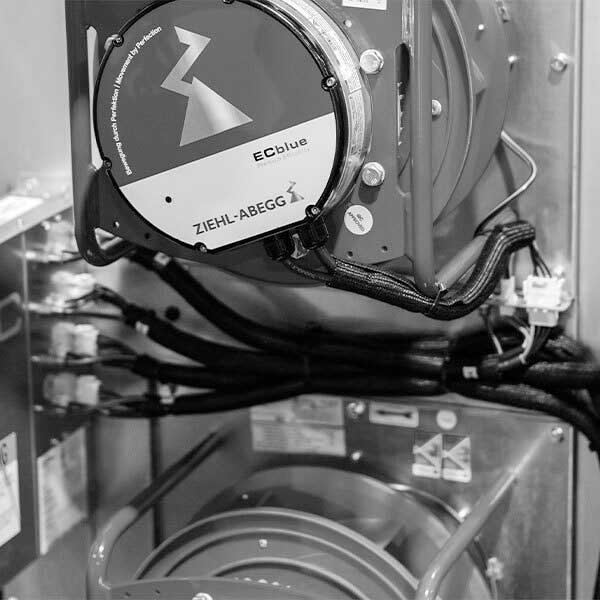
For engineers, the takeaway here is simple: smarter fan architecture – like the way the Q-PAC MPF uses multiple motorized impellers to function as a single fan assembly – yields better control, part-load performance, and system resilience. All without overhauling the air handler or compromising airflow.
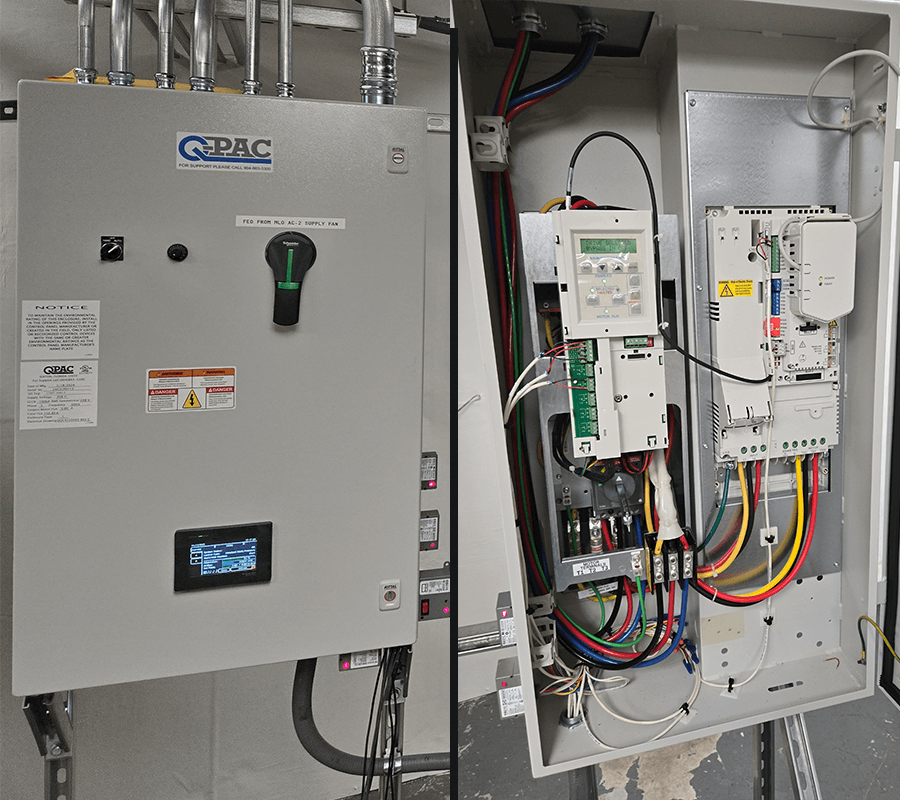
In this same project, a separate observation showed 8.6% efficiency improvement when a VFD was added to a legacy return fan – not part of the Q-PAC installation. It's important to clarify: the Q-PAC Fan does not use VFDs. Each motorized impeller within a Q-PAC Fan is an ECM, capable of modulating speed independently. System-level control is handled by Q-PAC’s patented Fan Controller, which manages total performance without the need for external VFDs.
To put it in perspective: while the VFD on the return fan saved 343 watts (8.6%), the Q-PAC Fan reduced power consumption by over 8,000 watts (43.47%). That’s the difference between trimming and transforming.
What Could This Mean for You? In systems with aging fans or belt-driven setups, the Q-PAC Fan offers more than a quick fix. It’s a strategy-level move toward greater controllability, energy visibility, and standardization.
Get Access to Full Technical Study
Fill out the form below to gain access to the full technical study, completed in collaboration with Ainsworth Company.