Think in Systems, Not Silos
Imagine you’re running a relay race, but instead of passing the baton smoothly, each runner drops it, picks it up, and then starts running again. That’s how many commercial buildings manage airflow—each component acting in isolation, creating inefficiencies at every turn. The truth is, your commercial HVAC system isn’t just moving air; it’s part of a delicate ecosystem of energy, comfort, and cost. Treating it as a standalone entity ignores the larger impact on your building’s efficiency and sustainability.
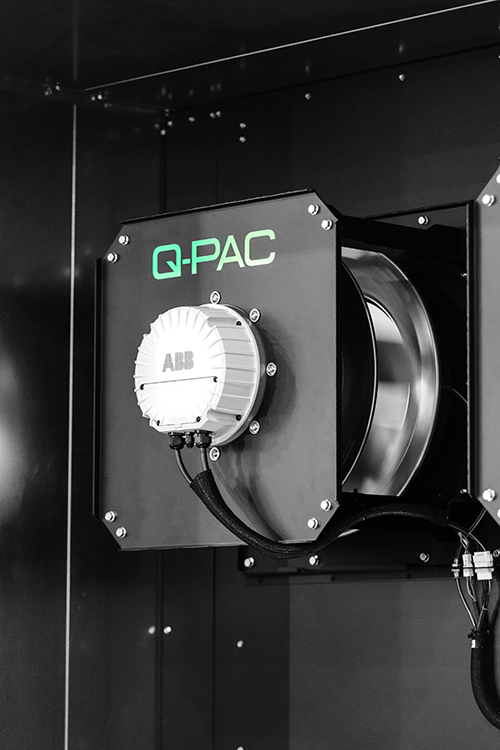
The multimotor plenum fan was designed with this systems-thinking approach in mind. Instead of treating airflow as a mechanical problem to brute-force through, multimotor plenum fans integrate seamlessly into the broader energy strategy of a building. Multiple motorized impellers working as one fan means redundancy and efficiency without the burden of oversized, inefficient systems. Better yet, they reduce strain on upstream and downstream components (think components such as ductwork and cooling coils), optimizing the entire commercial HVAC operation by minimizing pressure drops and ensuring a more stable and efficient airflow distribution. A sustainable building is a connected building—when airflow works in harmony with heating, cooling, and ventilation, energy isn’t wasted, and maintenance becomes smarter.
Shift from Cost-First to Lifecycle Thinking
It’s easy to make a purchase decision based on price tags. The lowest bid wins, and the project moves forward. But in facility management, what you pay upfront is just the beginning. The real question is: How much will this decision cost you over time?
Most traditional commercial HVAC fans come with a hidden expense—years of maintenance, costly downtime, and replacement parts that make their way into the budget year after year. The multimotor plenum fan flips this model on its head. With high-efficiency ECM motors, parallel wiring for resilience, and a plug-and-play kit design, the total cost of ownership is dramatically lower. Instead of replacing entire fan systems or suffering through unplanned failures, you gain a system that’s built for long-term savings—lower energy use, fewer emergency repairs, and a lifespan that outpaces legacy equipment. Choosing sustainable equipment isn’t just about being green; it’s about making financially sound decisions that hold up over decades, not just bid cycles.
Rethink Commercial HVAC Maintenance: From Preventive to a New Standard of Reliability
Traditional facility maintenance is built around prevention—regular inspections, scheduled part replacements, and emergency repairs when things go wrong. But what if failure wasn’t something to be avoided at all costs, but something seamlessly accounted for in the system itself?
Multimotor plenum fans challenge conventional maintenance strategies by eliminating the need for traditional predictive analytics. Instead of relying on scheduled upkeep or costly real-time monitoring to prevent breakdowns, these fans are designed to run to failure without disrupting operations. When a motor reaches the end of its lifecycle, the remaining motorized impellers continue to carry the airflow load, ensuring uninterrupted performance. Replacing a failed component becomes a simple, planned swap-out rather than a critical failure event requiring urgent response.
This shift changes how facilities approach sustainability and labor costs. Reactive and preventive maintenance merge into a straightforward, modular approach—technicians replace motors as needed, but without the urgency or unpredictability of conventional failures. With the multimotor plenum fan, the burden of maintaining infrastructure is drastically reduced, freeing up facility teams to focus on broader operational improvements rather than constant system oversight.
Prioritize Indoor Air Quality (IAQ) as Part of Sustainability
Energy efficiency and air quality are often treated as opposing forces—tighten up a building to save energy, and you risk stale, unhealthy air. But in reality, the healthiest buildings are the ones that move air efficiently, ensuring proper ventilation without excessive energy waste.
The multimotor plenum fan improves IAQ by enhancing air movement without overburdening the system. Its design allows for consistent, balanced airflow, reducing stagnation and ensuring that ventilation systems perform optimally. When air circulates properly, contaminants are diluted, CO2 levels remain stable, and occupants feel the difference, not just in energy savings but also in comfort and health. Sustainability isn’t just about buildings using less energy; it’s about making them places where people can thrive.
Designing Commercial HVACs for Future Iteration and Serviceability
Buildings aren’t static—they evolve. What works today might not work tomorrow, whether due to tenant changes, regulatory shifts, or new sustainability goals. Facility managers need equipment that isn’t just efficient today but can also be upgraded and serviced easily.
The multimotor plenum fan’s modular approach embraces future iteration. As motor technology advances, future generations of motors can be integrated seamlessly. Software updates (and, in the future, over-the-air adjustments) will provide enhanced performance without requiring hardware replacement. More importantly, the ergonomic and serviceable design of a commercial HVAC fan simplifies maintenance and replacement, ensuring facilities teams can work on the product with minimal specialized tools or training. This focus on serviceability and modular upgrades makes the multimotor plenum fan a forward-thinking investment in long-term building efficiency.
Sustainability in facility management isn’t about one-time fixes or flashy tech—it’s about reframing how we think about buildings, airflow, and long-term efficiency. It also isn’t on facilities and operations teams alone—manufacturers must design technology that considers both the users of today and the needs of tomorrow. The multimotor plenum fan aligns with that mindset by offering a smarter, more resilient, and future-ready approach to air movement. As you rethink your facility’s strategy, start with these five shifts. The right equipment isn’t just an expense—it’s an investment in a more sustainable, adaptable future.