From a Q-PAC Engineer: Aluminum or Polymer Plug Fans?
Polymer vs. Aluminum Impellers in EC Plug Fans
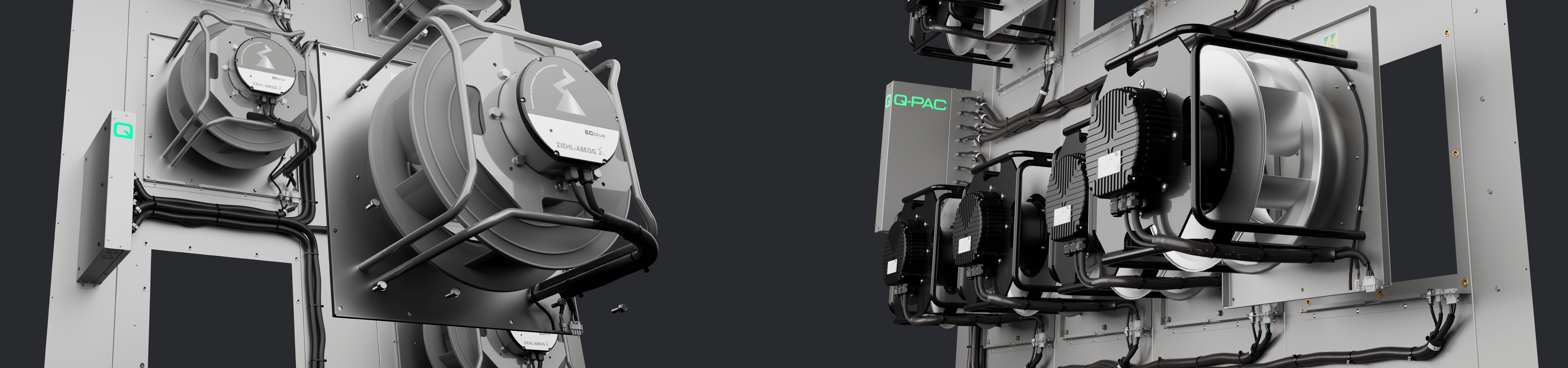
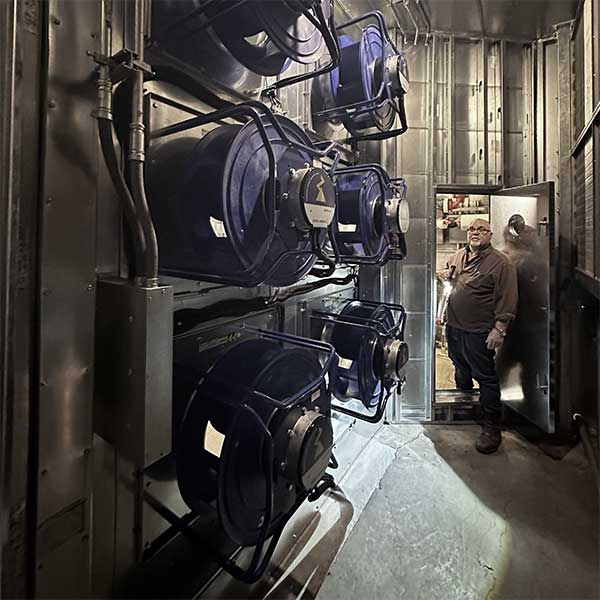
Modern EC plug fans typically rely on two main impeller materials, welded aluminum and polymer. Both are widely used by various manufacturers and both perform extremely well in commercial HVAC applications where Q-PAC Multimotor Plenum Fans operate. The differences come down to blade geometry, material behavior, static pressure capability, and customer preferences.
Polymer Impellers
Fiberglass-reinforced polymer impellers are known for being lightweight and aerodynamically flexible. A well-known example of polymer capability is Ziehl-Abegg’s Bluefin, which uses injection molding and biomimicry to create quiet and efficient blade shapes modeled after a whale fin. These advanced molded designs can offer higher efficiency, although they are often more costly. Standard backwards-curved polymer impellers such as Ziehl-Abegg’s Cpro have efficiency levels similar to aluminum versions at common commercial static pressures. Ziehl-Abegg’s ZAmid polymer material is also 100% recyclable, which can support sustainability efforts.
Polymer impellers fit well in clean, moderate temperature AHUs and are naturally corrosion resistant. Noise performance can be very good depending on the application. Dust and biological buildup is similar to aluminum, and Q-PAC recommends cleaning blades every six months to prevent buildup, imbalance, and reduced bearing life.
One drawback of polymer impellers is their rigidity. Because polymers are less rigid than aluminum, they generally cannot reach higher static pressures above 7 inWC depending on size and design.
Aluminum Impellers
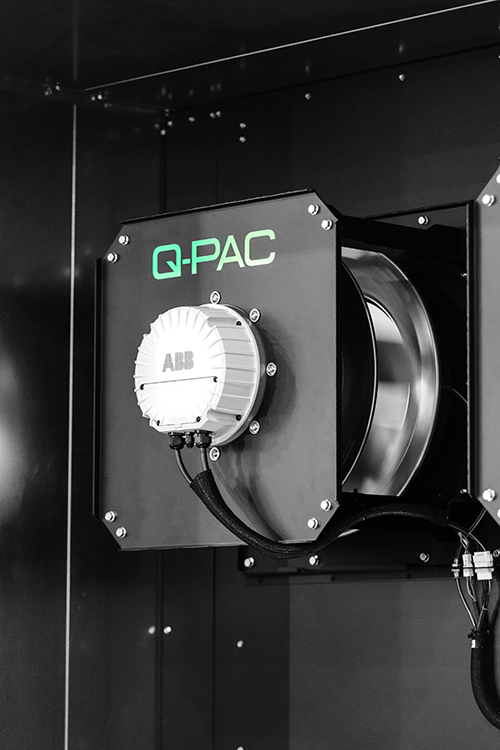
Aluminum continues to be the most common impeller material in EC plug fans. Welded aluminum blades offer strong rigidity and dimensional stability, making them well suited for higher static pressure applications up to roughly 10 inWC depending on the impeller design. Many manufacturers rely on aluminum for their higher pressure models. Examples include ebm-papst mixed flow impellers used in RadiPac style fans and Punker’s DPrime series designed for higher pressure performance.
Aluminum is also typically preferred by impeller manufacturers because design changes are easier to implement through small tooling adjustments. Polymer impeller updates usually require creating an entirely new mold, which makes design changes more difficult and more costly.
Aluminum is naturally corrosion resistant, handles higher temperatures than polymer, and is fully recyclable, which can be valuable for long-term sustainability goals. Weight is often comparable between aluminum and polymer impellers, so bearing life considerations are similar when blades are cleaned regularly.
What this Means for Commercial HVAC Systems
Both impeller materials perform reliably within commercial comfort cooling applications such as offices, hospitals, schools, entertainment venues, transportation hubs, and light industrial spaces described in the Q-PAC Fan Application Guide.
Polymer impellers tend to offer advantages in acoustics and molded blade shape capabilities. Aluminum impellers offer stiffness and stronger performance at higher static pressures. Ultimately, in terms of performance and longevity, one impeller material does not offer significant advantages to the customer.
In the end, most customers never need to worry about impeller material at all. Q-PAC evaluates performance, static pressure, acoustics, availability, and long-term reliability for every fan we build. Whether the impeller is aluminum or polymer, the goal is the same: delivering the best possible solution for your application. We make that decision so you don’t have to.